
Why the Equal Rights Amendment Matters More Than Ever in 2026
Equality as a Fundamental Principle of Democracy. The question isn’t whether equality is important—it’s whether it should be explicitly guaranteed in the Constitution.

Two hundred and fifty years after our nation proclaimed that “all are created equal,” the United States Constitution still fails to explicitly guarantee equal rights irrespective of sex. This unfulfilled promise makes the Equal Rights Amendment (ERA) one of the most crucial civil rights issues of our time.
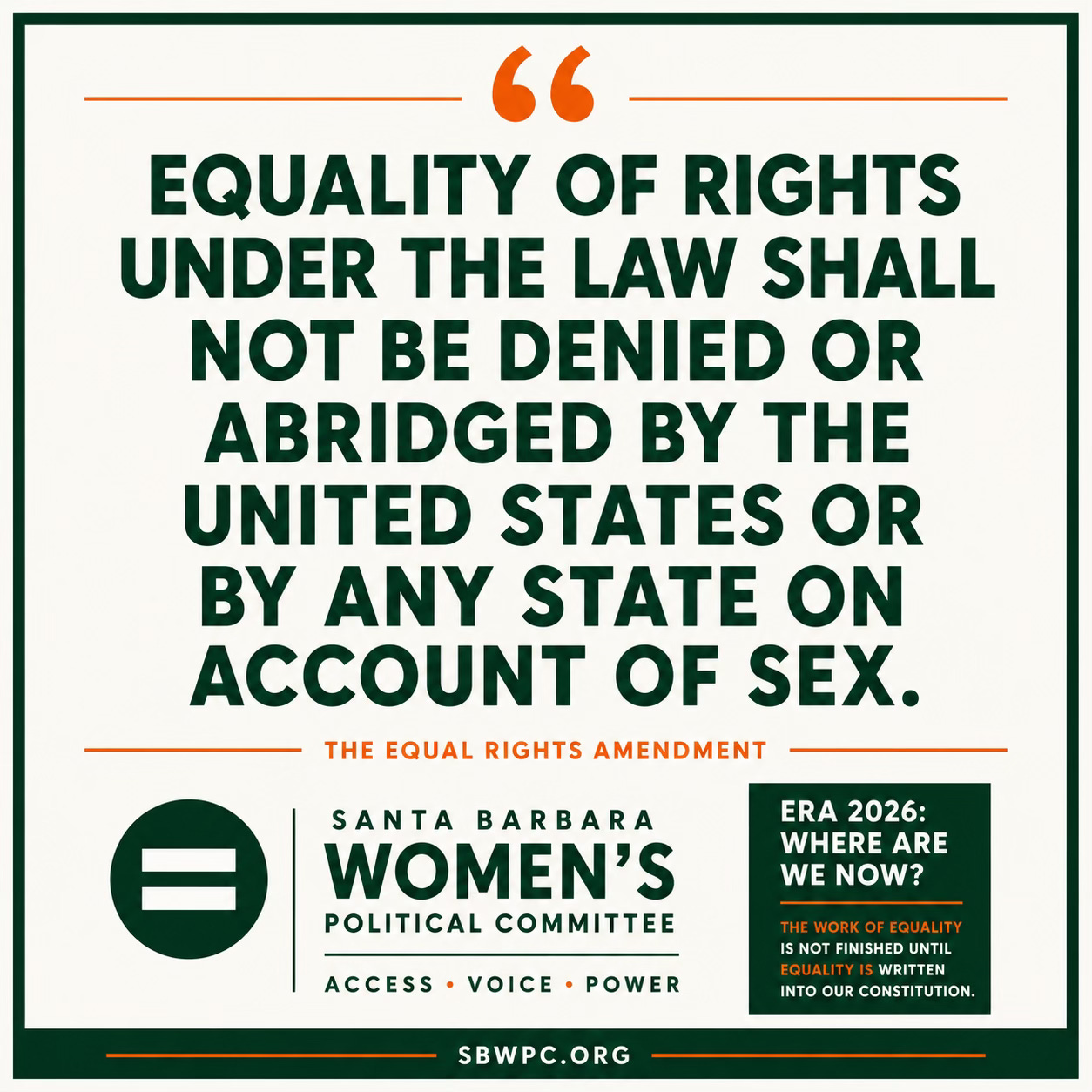
The Equal Rights Amendment (ERA) is straightforward in its language: “Equality of rights under the law shall not be denied or abridged by the United States or by any State on account of sex.” First introduced by Alice Paul in 1923, the amendment was approved by Congress in 1972. However, despite 38 states voting to ratify it, legal disputes over ratification deadlines have left its constitutional status unresolved. The debate continues in Congress, the courts, and among constitutional scholars.
The question isn’t whether equality is important—it’s whether it should be explicitly guaranteed in the Constitution. While federal and state laws provide many important protections, supporters of the ERA believe that constitutional rights offer the strongest and most enduring foundation for equal justice. As recent court decisions have shown, statutes and judicial interpretations can change over time, making constitutional protections even more crucial.
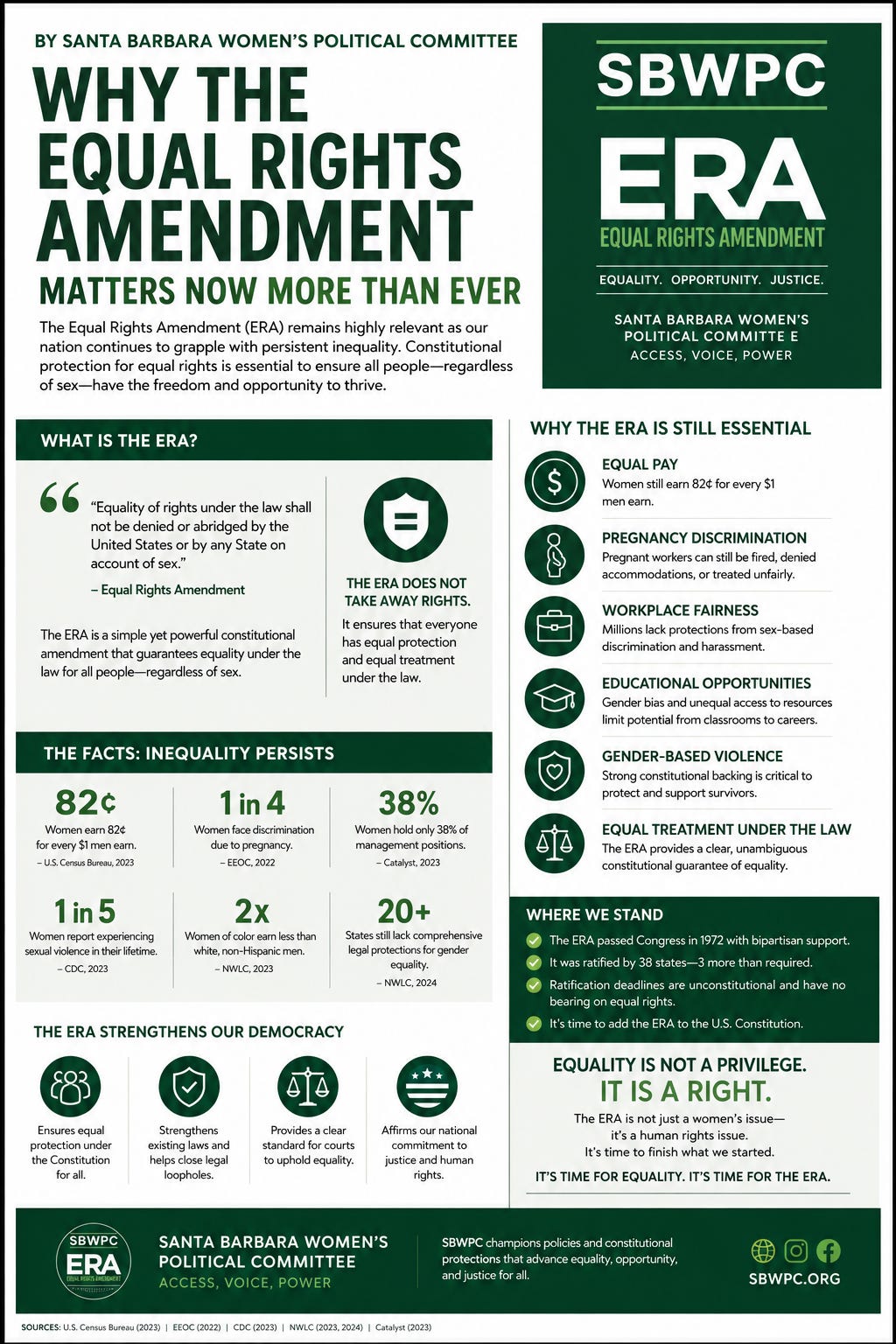
The Equal Rights Amendment (ERA) remains highly relevant as the nation continues to grapple with issues such as equal pay, pregnancy discrimination, workplace fairness, educational opportunities, gender-based violence, and equal treatment under the law. While there may be differing opinions among Americans regarding the legal implications of the ERA, it is widely acknowledged that equality is a fundamental principle of democracy.
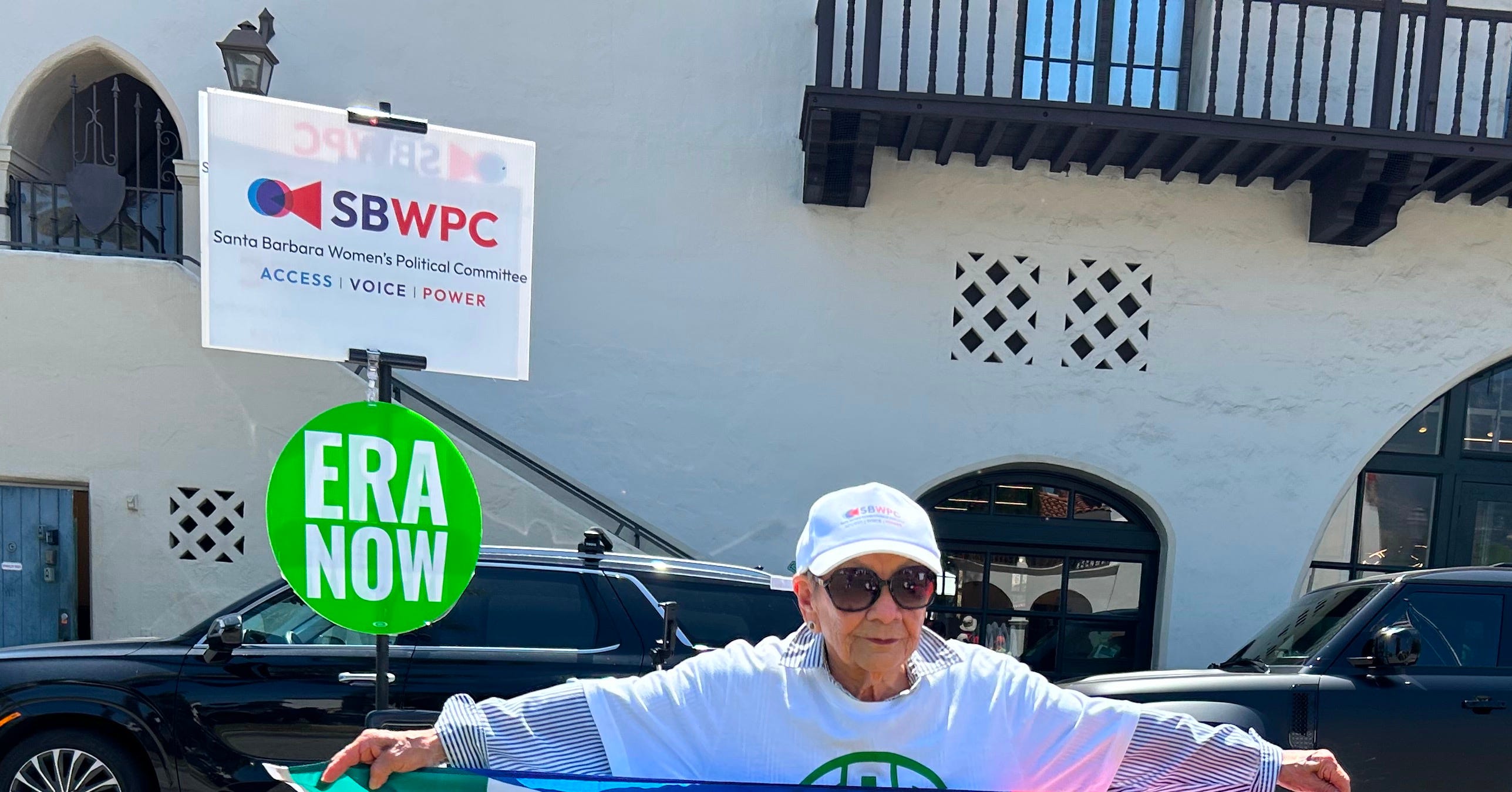
The Santa Barbara Women’s Political Committee is proud to be one of the few local organizations with a dedicated Equal Rights Amendment Committee. The committee works tirelessly to educate the public about the amendment’s history, current legal status, and its ongoing significance. Through community education, public dialogue, and civic engagement, we firmly believe that every generation has a shared responsibility to advance the promise of equal rights for all.
The Equal Rights Amendment (ERA) goes beyond being a mere constitutional amendment. It aims to ensure that equality is not contingent upon the whims of changing political climates or shifting judicial interpretations, but rather recognized as an enduring American principle
Over a century after the ERA’s initial proposal, the fundamental question remains: Should equality under the law be explicitly enshrined in the Constitution?
At SBWPC, our stance is unequivocal. We firmly believe that the essence of America’s promise lies in the universal recognition of equality—and when that promise is inscribed into the nation’s highest law.
Sources
National Archives – Equal Rights Amendment — History of the ERA, amendment text, ratification process, and current status.
National Archives – Martha Griffiths and the Equal Rights Amendment — Congressional passage in 1972 and the original and extended ratification deadlines.
U.S. Capitol Visitor Center – H.J. Res. 75 (1923) — Original introduction of the ERA by Alice Paul and its legislative history.
Alice Paul Institute – History of the ERA — Background on Alice Paul and the origins of the amendment.
Brennan Center for Justice – The Equal Rights Amendment, Explained — Constitutional analysis and legal implications.
Associated Press – Timeline of the Equal Rights Amendment — Updated chronology through the current debate over certification.
Associated Press – Archivist says Equal Rights Amendment can’t be certified — Explains why the amendment’s legal status remains unresolved despite ratification by 38 states.
Equal Rights Amendment Coalition — Historical timeline and advocacy materials supporting ERA ratification.
Center for American Progress – What Comes Next for the Equal Rights Amendment? — Discussion of current legal and policy arguments surrounding the ERA.